Lend me a potato, I am your neighbour

What is it about friendly strangers that we are so afraid of?

Over the past week or so, a woman in our neighbourhood has come to our attention. We have all met her separately, but when we compared notes we all knew that we were talking about the same person. You remember people who talk to you on the street, because most of the time people don’t.

I met her up the street. She commented on my hair and then we happened to catch the same bus. We got off at the same stop and walked in the same direction. She asked rapid fire questions and smiled a lot and gave me her phone number because she does home visit haircuts. We lingered at my front gate for a bit and then she asked if she could pick some grass from the front lawn. I had no objections. I was puzzled, but I had no objections. Apparently she feeds it to her cat. Speaking of cats, she mentioned that she had bought our cat home once. I remembered Danger telling me that a lady had knocked on the door and given our cat back.

A few days later I mentioned the incident and my boy, Mr Mundey, piped up “Oh yeah, she’s cool! I was talking to her”. This time she’d knocked at the door asking to borrow a tool. Being the agreeable fellow that he is, he went looking for the tool in the shed. Couldn’t find it. We both agreed that there was something very warm and open about her. Mr Mundey is very open minded and he likes people.

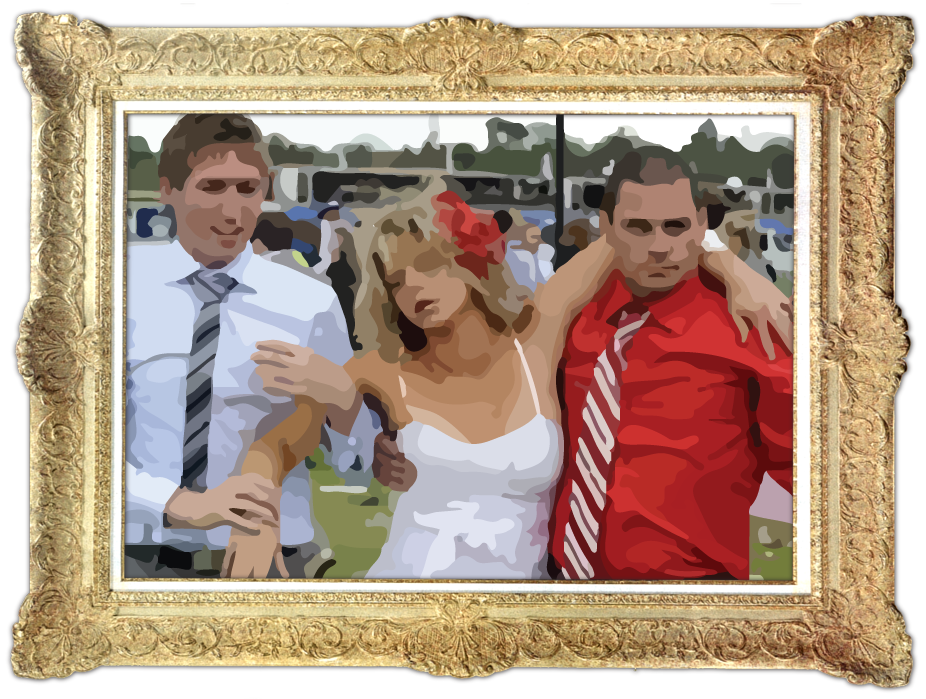
So then it’s last night. We were sitting around the table telling stories and Danger mentioned that she’d bought the cat back again. Another visit from the friendly stranger. Not long after, I was washing up and I heard voices at the door. A few seconds later and Mr Mundey brought her into our kitchen. The friendly stranger! She wanted to borrow a potato. All we had was a sweet potato, but we agreed that it’s still good for mashing, and off she went with her sweet potato.

So am I weird for even thinking that’s weird? Or do we live in a weird world? Have we become so insular that, human-to-human, we are not allowed to freely interact unless all of the social steps have been danced first?

When is it socially acceptable to start borrowing potatoes? SweetPotato_main

The Story of Leo and Chunk

Leo_and_Chunk

Yellow Brothers from another Mother

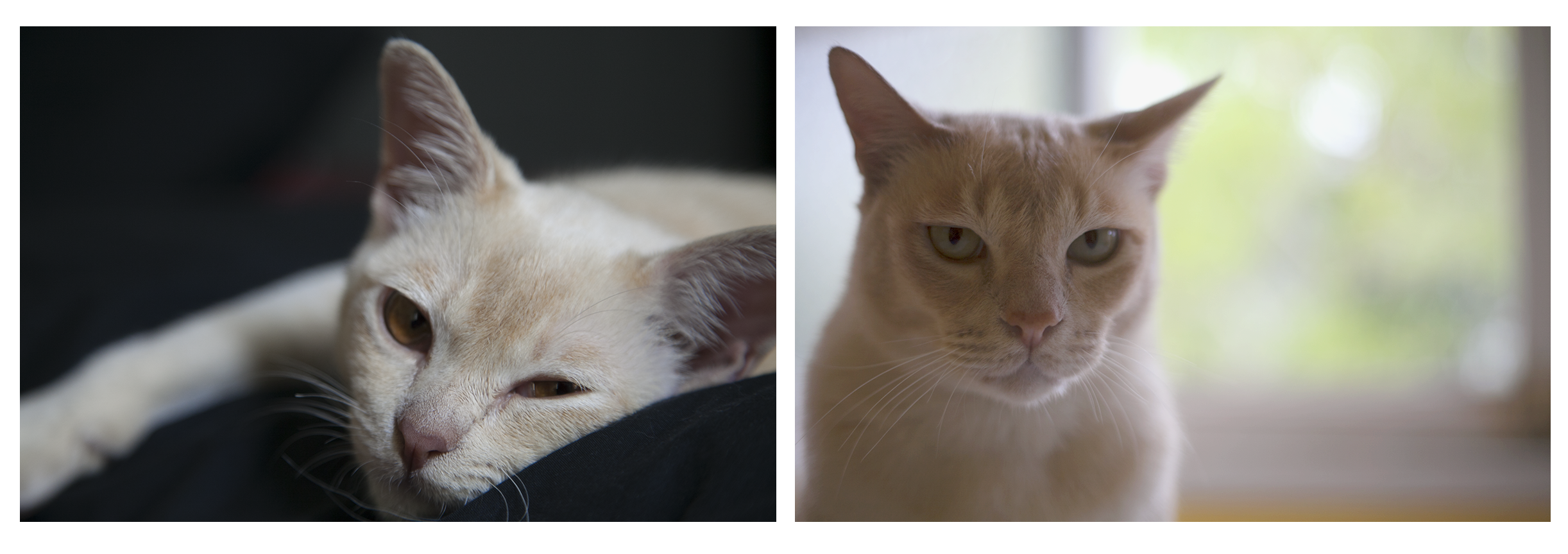
Leo was the first cat that we chose as a family. He was only the second cat that Danger and I had owned as a couple. Before that was beautiful Bella, a faithful friend for over seventeen years. She died of old age – very old age in cat years – and we were all devastated. We found Leo on Gumtree from a breeder who lived out West. Her house smelt unbearably of cat wee, but she sure knew how to breed Cuties. Ask Rudie’s Mum. Rudie was from the same litter.

Leo was our James Dean cat. He was young and spunky and wild. It was hard to get a cuddle out of him, but he was so fun to be around. If a human was standing still, he’d scale them like a tree…and then get stuck, as kittens do. We laughed at him trying to stalk birds in the backyard, creeping and prowling without realising that his bright yellow fur was hardly camouflage.

Little kids loved Leo. They related to him, because he was a little kid too. My beautiful friend Marina was visiting with her nephew, Lucas, and he chased Leo around the house saying “Mao”. I just thought it was toddler-talk for “Cat”. A cat says meow, so he called all cats “Mao” (and it has to be pronounced Mao, like Chairman Mao. Not Me-ow). But I found out later that he was actually trying to speak cat.

We dropped Lucas home and I was super excited to find that he lived with a BIG yellow cat. A Big Leo! With a deep man-voice the yellow cat said “Mao”. When Lucas said Mao, he was trying to communicate back. I was so excited to tell the family that night that I had met a big Leo. I even had photos on my phone as it was such a novelty.

The next day – the next day – our Leo was hit by a car and died. We’d had him for six months. It felt like he’d been snatched away from us. The shock was the same as when any young person dies. We consoled ourselves that he had lived life to the fullest. Our James Dean cat lived fast and died young.

I was all for getting a new cat straight away. I have lived my entire life with cats and I honestly believe that a house is not a home unless I’m sharing it with a cat. Danger wanted to wait and grieve Leo properly. I understood, but I still wanted a cat. A few weeks later, Marina asked us if we would like to “borrow” the big yellow cat that I had met at Lucas’s house. Did we what! We picked him up the very next day.

We found out that his real name is Topaz. Marina’s sister was cat-sitting for a friend who had moved to Perth. She didn’t mind loaning Topaz out, as she already had a dog and a young child to take care of and she knew that we missed Leo terribly. Originally we organised to take Topaz for the school holidays but we’ve had him for months now. We have never once called him Topaz. We call him Mao. Or Fatty or Ginger Chunk, or Chunky. Or just Chunk.

It’s so different getting to know a cat who is already grown. When you take on a kitten, it is like having a baby. You grow together and the love is almost parental. When you take on an already established cat, it’s like getting to know a friend. They grow on you. Now we can’t imagine our life without him. He is not Leo’s replacement, but he is the man-cat that Leo may have grown into.

Birthday Tree

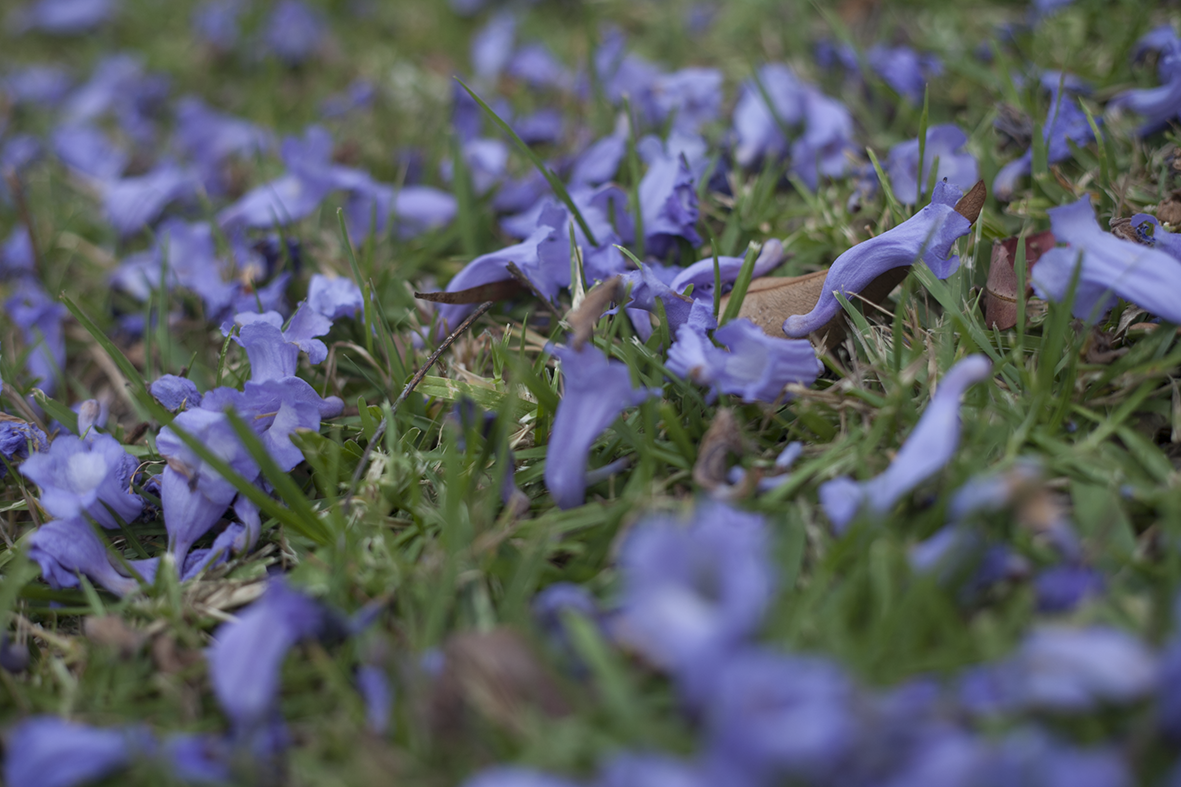
Fifteen years ago today, my beautiful son Angus Harpo was born. I have often found that there is a cold dip in the weather on his birthday. November is always like that, four seasons in a month. November is also the month of Jacaranda blooming.

Jacaranda trees have always made me happy. They raise even the most prosaic neighbourhood into the realm of beauty when they are in full bloom. And for the last fifteen years those magical purple flowers have been synonymous with my boy. I used to tell him when he was little that the Jacaranda tree was his birthday tree and he would know that his birthday was coming up whenever he saw the purple flowers arrive. Of course he outgrew that long before I did. But in my mind, the Jacaranda tree will always be the Birthday Tree for all November babies. Happy Birthday Scorpios!

Angus_Birthday

Jacaranda_01

Jacaranda_02

For the love of Splayds

I’m a splayd person. I come from a splayd family. My mum instilled splayd pride in all her children, as this eating utensil was designed by an Australian – a Sydneysider, no less. William McArthur invented his combo of fork, knife and spoon in the 1940s. I actually find the experience of eating less enjoyable with anything but a splayd. But hey, I’m riddled with crockery and cutlery prejudices. Don’t get me started on coffee mugs.

Anyway, I picked up this velvet box of splayds in Newtown today. There is nothing wrong with second-hand cutlery, because when you think about it, every fork or spoon you’ve ever used has been in someone elses mouth. Unless you’re in the habit of carrying around your own personal-use splayd.Splayds

Switching Speed Boats

speedboat

I like to use analogies to help me make sense of the world and of my own behaviour. The perfect analogy starts with a little image, a short-hand symbol to simplify a complex concept.

The way I explain my ever changing moods, the mercurial madness of my mind is that I’m forever switching speed boats.

Let me set the scene. Imagine that we are on some kind of narrow waterway. For some reason I’m thinking of a Louisiana Bayou, an alligator river in Florida or somewhere in Cancun. It’s definitely on the American continent in my imagination.

There are speed boats zooming along. Sometimes side by side, maybe three abreast. Sometimes the speed boat is all alone – just out in the wilderness. Speed boats speed up and slow down. Passengers are enjoying themselves on the speed boat, dancing around with cans of beer and big hats. Waving to each other from their boats. Sometimes pulling up right up beside each other so people can change speed boats. Two speedboats can be right next to each other one minute, and then in the blink of an eye, one has zoomed off.

The speed boats represent my state of mind. I’m forever switching speed boats. It can become exhausting and maddening and of course exhilarating at times. Sometimes I might be puttering along in my old, beat up tinny. Dropping a fishing line off the side and cruising through the river of life. Then I switch speed boats and I’m off like a rocket through the white water. When the speed boats are travelling abreast, I’m at one with the people around me – we’re having a speed boat party! We can chat to each other from our boats. And then I switch speed boats. Speed up. Slow down. Zoom ahead. Fall behind. Sometimes I become unreachable in my speed boat. I don’t know how to drive the damn thing. Maybe the goal of life is to get my speed boat licence?

speedrace

Language As Symbols

Symbol_Talk

I recently had a dream that visualised the way that people communicate with each other. There is a note in my phone from 3:45am that says “Language as symbols and shapes that people exchange if you could see dialogue. Families and friends create their own personal symbol language”.

Now, by trying to make a hurried visualisation of the idea, I realise that it is a good way to understand all communication. When people are in-sync – simpatico – their symbols all look the same, they are in harmony. When people are talking at cross purpose and just not getting it, their symbols are completely different and all mixed up. People who speak different languages have completely different symbols. But every now and then, if you understand a couple of French words, or the Japanese way to say Thank You, you will understand one or two symbols in a completely different symbol language.

In my picture, the red crosses could be swear words, the green splodges might be insults. Imagine what a heated argument would look like. What about a rap battle!

If you could actually visualise dialogue in this way, it would help to understand why there is so much miscommunication. In-jokes that are shared by friends are actually the common recognition of a unique symbol that no-one else can interpret.

Little More Room

I often think of how I would like to help make the world a better place. I come up with ideas for charities or initiatives to help people less fortunate than myself. But being naturally quite shy and unassertive I can never really take any of my ideas to the next level. The thing about ideas is that they are an infinite resource. I am not looking to jealously guard or trademark any idea that I have that could help people. If I can get these ideas out into the universe and somebody wants to help me see them come to fruition – or even just take it and run with it themselves – than I am more than happy. 

This is an idea I have been thinking about for almost a year. If anyone has any contacts in a freight or logistics company or anyone else that they think might be able to help this idea along – share it around!

LITTLE MORE ROOM

Stand back for a moment. Looking from an objective viewpoint at the society we inhabit, it would be easy to assume that our purpose of existence is a lifelong accumulation of possessions. The quenchless desire to consume is a mania that has gripped the developed world. Production far exceeds need. To put it simply, if all manufacturing ceased tomorrow, if every production line came to a stand still, there would be enough consumer products left on planet earth to sustain us for a very long time. Enough excess clothing in our wardrobes to clothe many generations, enough unfashionable mobile phones to maintain communications, enough books printed to educate and inspire countless minds. But too many of these useful and functional items lay gathering dust, taking up space and going to waste – cast aside when something newer comes along. Perhaps the greatest irony of life is that one half of the planet’s population struggles to deal with their rising mountain of stuff, while the other half suffers from severe deprivation. The answer seems so simple:

Redistribution of resources

Take the things that we don’t need, don’t want, have no use for and give them to someone who could use them, who could benefit from them, who would be grateful for them.

But unfortunately it is not that simple. Take a common scenario: We may gather up some old clothes and household goods and put them in a charity bin or donate them to the local church. In theory we are doing something to help redistribute resources. In practice it is like throwing a dart blind-folded. There is no way of knowing if we have hit the target.

The best-case scenario is that the things we give away or donate go directly to another citizen of planet earth who needs them most. It’s a win-win situation.

But targeting where resources are distributed is a matter of logistics. Global freight and logistics companies touch almost every surface of planet earth. Their networks can distribute goods from one side of the globe to another. Understandably this is big business and a powerful force in our globalized society. Harnessing the reach of global freight and logistics could be the answer to a life changing redistribution of resources.

If every shipping container, cargo plane, rail freight car and delivery van had just a little more room, they could afford to forward a package of charitable donations directly to a place or person in need. Environmentally this makes sense. A fully loaded freight carrier leaves less of a carbon footprint than one that is not filled to capacity.

If every over-shopped consumer and over-stocked storeroom wanted to make a little more room in their home or business they could choose to donate items they no longer use, to people who have great use for them.

If every one of us had a little more room in our schedule, a little more room in our day and a little more room in our heart we could work together to create a solution with nothing more than what we already have.